Editorial review: October 17, 2026 · Educational guide · Identification
In brief: Look for physical evidence, not bite patterns alone. We focus on what you can verify and which steps are safe and realistic.
The most reliable clues
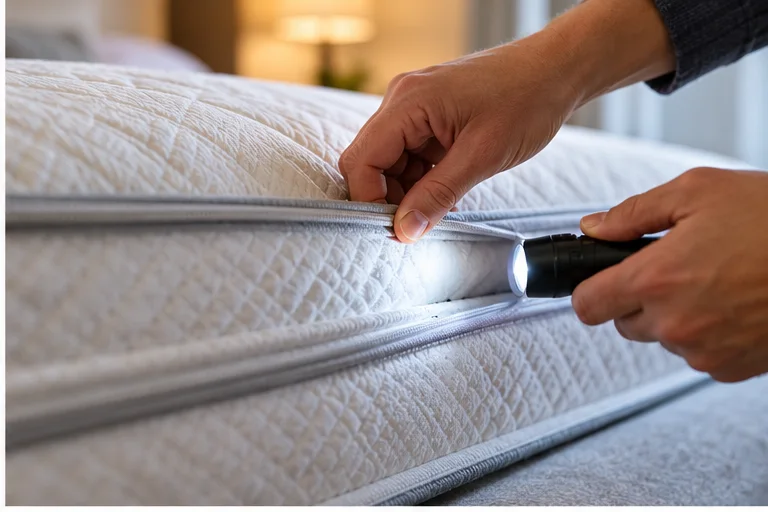
Live insects, shed skins, eggs and dark fecal marks near sleeping areas are stronger clues than skin reactions. Inspect the seams and piping of mattresses, the corners of box springs, the joints of bed frames and the space behind the headboard. Use a flashlight and move slowly.
What marks on sheets mean
Small reddish stains may appear on bedding, and dark spots may be visible on fabrics or nearby surfaces. None of these marks proves bed bugs by itself; other causes are possible. A collected specimen gives an expert much more to work with.
What bites can and cannot tell you
People react differently. Some have itchy welts, some develop a delayed reaction and others have no visible reaction. Rows or clusters of bites can occur, but appearance cannot reliably distinguish bed bug bites from other causes. A clinician can help assess a concerning skin reaction.
A careful ten-minute inspection
Strip back the bedding. Examine mattress seams and tags, the bed frame and headboard, then check nearby nightstands and upholstered furniture. Put any suspicious insect in a sealed container or photograph it with a size reference. Avoid scattering belongings before you know what is happening.
When to escalate
If you find definite evidence, notify building management when applicable and arrange a professional evaluation, particularly in apartments or when activity appears in several rooms.